









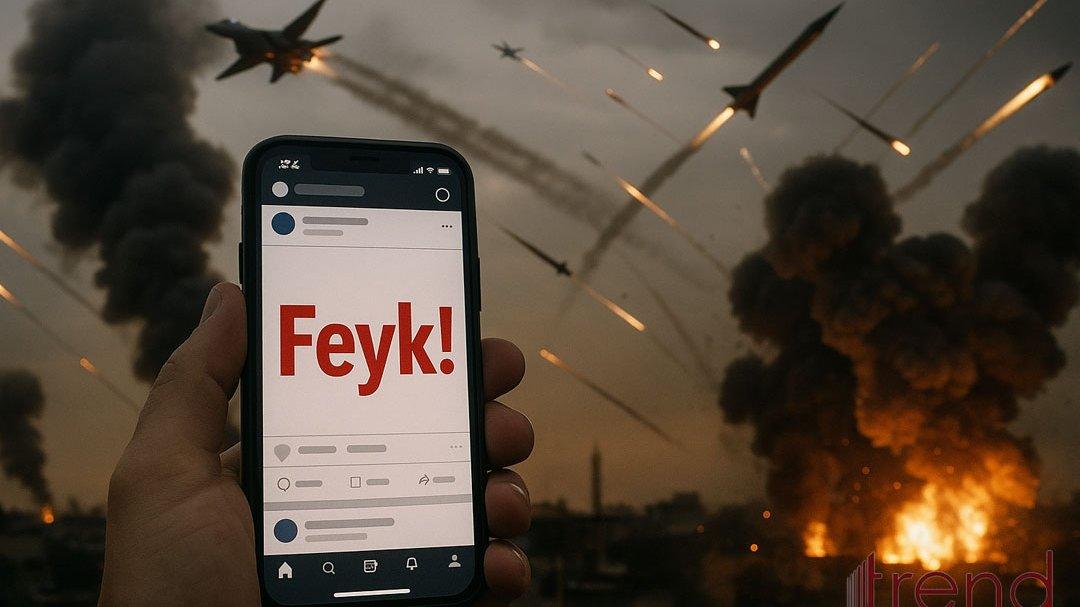

Fake news in Azerbaijani media during the Iran-Israel war
06 August 2025
By Zumrud Pashkin
Amid escalating regional tensions in June, Azerbaijani media provided extensive coverage of the brief yet intense 12-day conflict between Israel and Iran, despite lacking direct access to the war zone. Positioned geopolitically between a shared border with Iran and a cooperation with Israel, Azerbaijan faced a particularly delicate situation. In the absence of on-the-ground reporting, local media outlets frequently relied on foreign sources, some of which disseminated unverified or biased information—contributing to the spread of misinformation within the domestic media landscape.
In several cases - from sensational headlines to misattributed videos - the content blurred the line between journalism and manipulation. In some digital media, sensational headlines have emerged as a key tool for spreading misinformation around the Iran-Israel conflict. These headlines often exaggerate, distort key events to provoke emotional reactions, generate clicks, or advance political narratives. In these articles, the common tactics include alarmist framing, such as falsely suggesting the outbreak of global war,
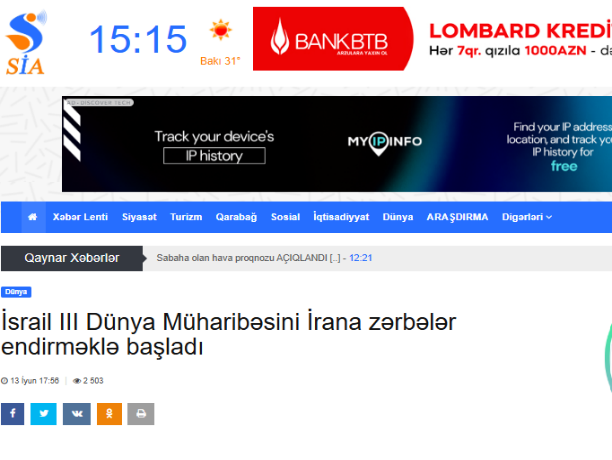
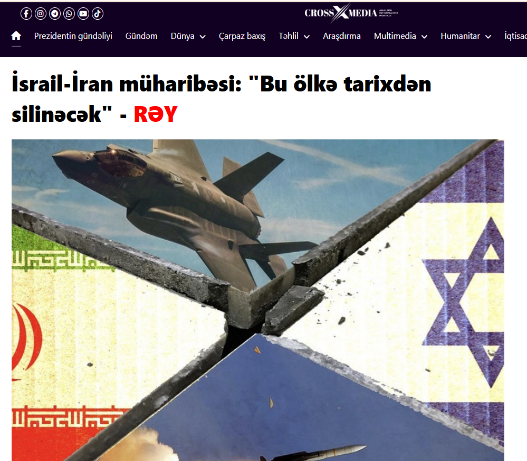
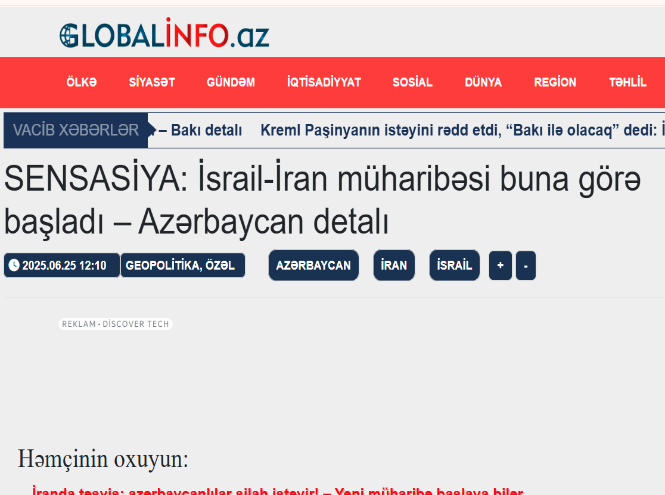
designed to incite fear and urgency, unverified geopolitical claims, even tying Azerbaijan to the conflict without evidence, and emotional manipulation by declaring premature “victories or defeats”. For example, the headline of an article from Globalinfo gives a wrong impression that Azerbaijan has a role in the war - " SENSATION: The Israel-Iran war started because of this – the Azerbaijan detail".
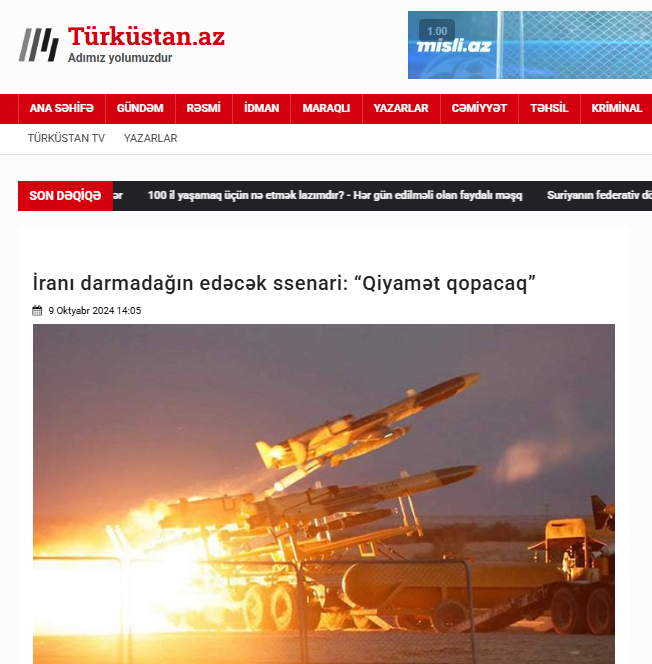
Another example in Turkustan, the headline is highly sensationalistic - "The scenario that will devastate Iran: 'The Apocalypse will erupt”. These headlines may raise concerns depending on the context and target audience.
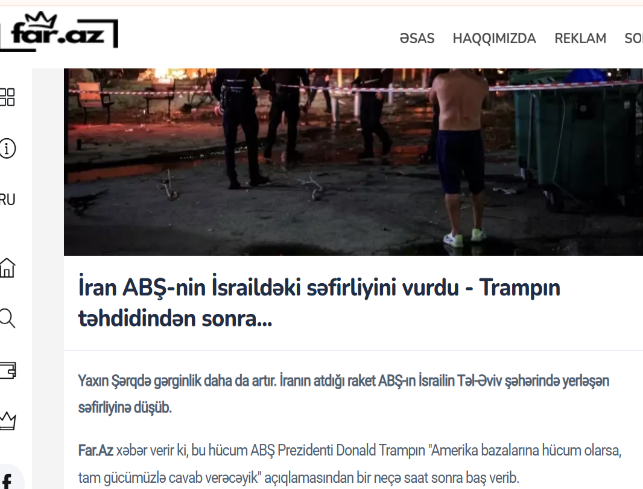
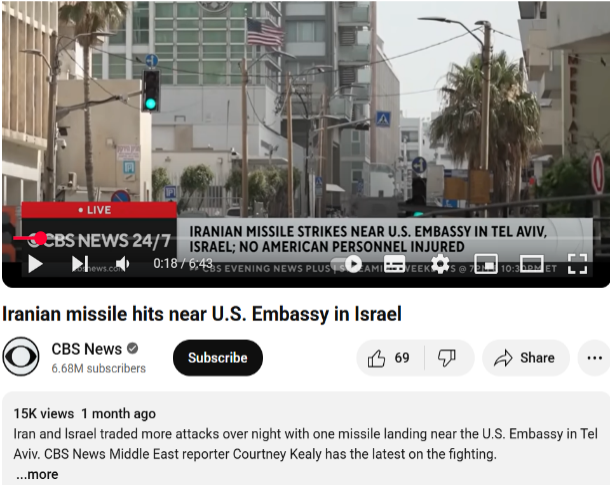
In the report by Far.az it was falsely alleged that Iran had bombed the U.S. Embassy in Israel. However, when one reads the original news, it appears that an Iranian missile landed close to the U.S. Embassy in Tel Aviv and the situation is not like that the website described - "A missile launched by Iran has hit the U.S. Embassy located in Tel Aviv".
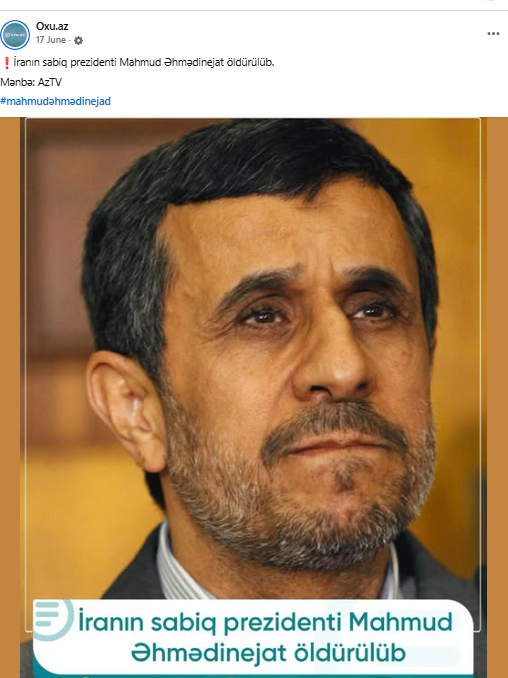
Along with manipulated, exaggerated, and sensational headlines, there were also cases of fake news circulating in Azerbaijani media. One of the most notable examples occurred on June 15, when several Azerbaijani news outlets - including the state-run television channel AZTV - falsely reported that former Iranian President Mahmoud Ahmadinejad had been assassinated. The story quickly went viral across online platforms and social media. However, within hours, both Ahmadinejad’s office and Iran’s major state news agencies denied the reports, confirming that the former president was alive. This incident highlights how, in a crisis environment, media may rush to publish without credible verification. However, fake news about Ahmadinejad was removed from AZTV’s social media accounts but still other media outlets which cited AZTV did not remove that news. However, even when fake news is later denied - as in the case of the false report about the assassination of former Iranian President - the fact that such fake news made its way into the media ecosystem, including official or semi-official outlets, is deeply problematic.
The speed and visibility of the original misinformation often far outweigh the impact of any corrections. This raises serious concerns about verification processes and the sensitivity of even state-affiliated media to disinformation. It reflects a broader vulnerability in the media sector, where sensationalism and the drive to publish first often replace the fundamental principles of accuracy and responsibility.
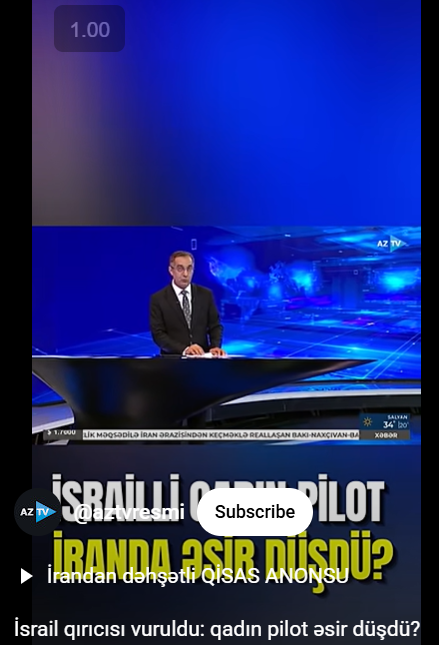
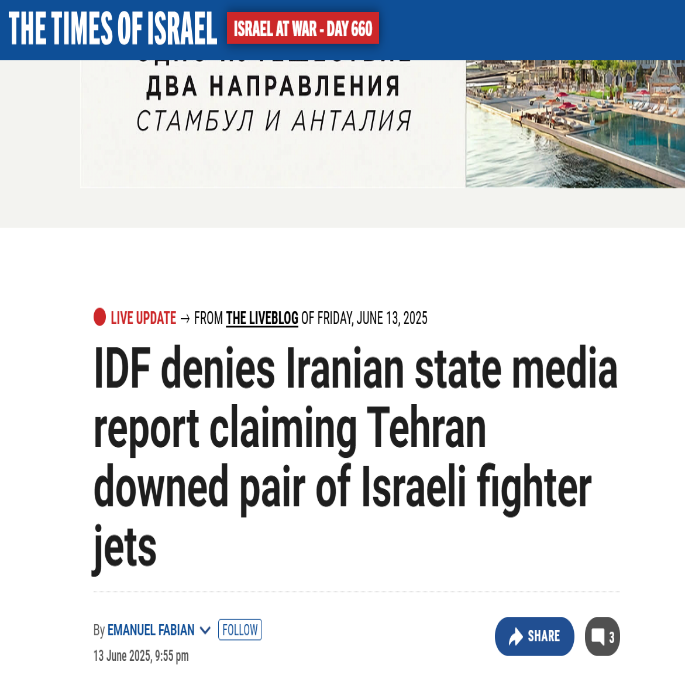
In another report broadcast by AZTV, it states that Iran captured an Israeli woman pilot, citing Iranian sources. However, the Israeli Defense Forces (IDF) denied Iran’s claim. On online platforms, a widely shared photo showed a woman in military slacks standing with arms crossed in front of a plane, but later, fact-checkers confirmed that she is the Chilean Navy’s firs female pilot and not an Israeli woman pilot. And Iran did not provide any evidence or release a photo of that “captured woman pilot”.
During the peak of the Iran-Israel war, numerous fake videos also circulated across social media platforms. These clips often featured misattributed footage from past wars or disasters, computer-generated imagery falsely presented as real-time visuals from the conflict.
For example, on the Instagram account of the APA Information Agency, a video was posted claiming that this was an Iranian missile attack on the Mossad (Israeli Intelligence and Special Operations Agency) building in Herzliya. The post cited Iranian media as the source.

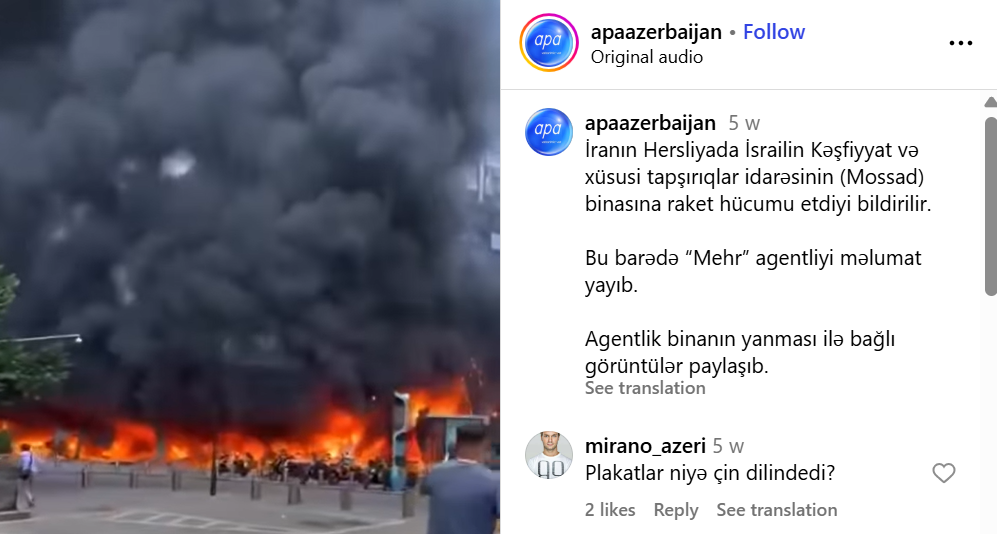
However, the video used was not related to attacking Israel. In reality, the footage showed a large fire at a motorcycle parking facility in Chongqing, China, which occurred on June 11. This footage was falsely attributed to a military attack. Another video published by "Qafqazinfo.az" news website, claiming to show the U.S. strikes on Iran's nuclear facilities. On June 22, the U.S. carried out airstrikes on Iran’s nuclear facilities using B-2 bombers; in the attack, Fordow, Natanz, and Isfahan sites were targeted. However, “Qafqazinfo”s video does not show any U.S. strikes. The over 10-minute video published on the website (Fox News's video report) features reporters discussing U.S. actions and the Iran-Israel conflict, occasionally showing footage of strikes by both sides. The specific footage shown was actually from an Israeli strike on Isfahan conducted earlier and had already been posted on the Israeli military’s official X account on June 20.
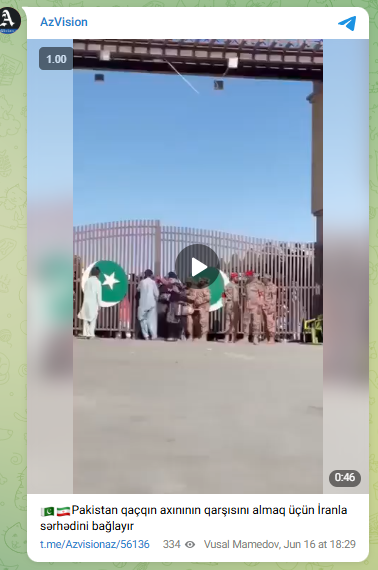
Following Israeli strikes on Iran—particularly those targeting the capital, Tehran - there were reports in international media suggesting that some Iranians were attempting to leave the country. However, alongside these reports, a wave of disinformation emerged on social media. One example was a video circulated by some news websites' (such as azvision, axar.az) Telegram channels, which falsely claimed to show Iranians fleeing to Pakistan. In reality, the video was over three years old. This case proves how old footage can be used to create a false sense of panic during military escalation.
During military escalation several AI-generated fake images circulated widely on social media and even appeared in digital media outlets of Azerbaijan. One such image falsely claimed to show an Israeli spy tied to an Iranian missile.
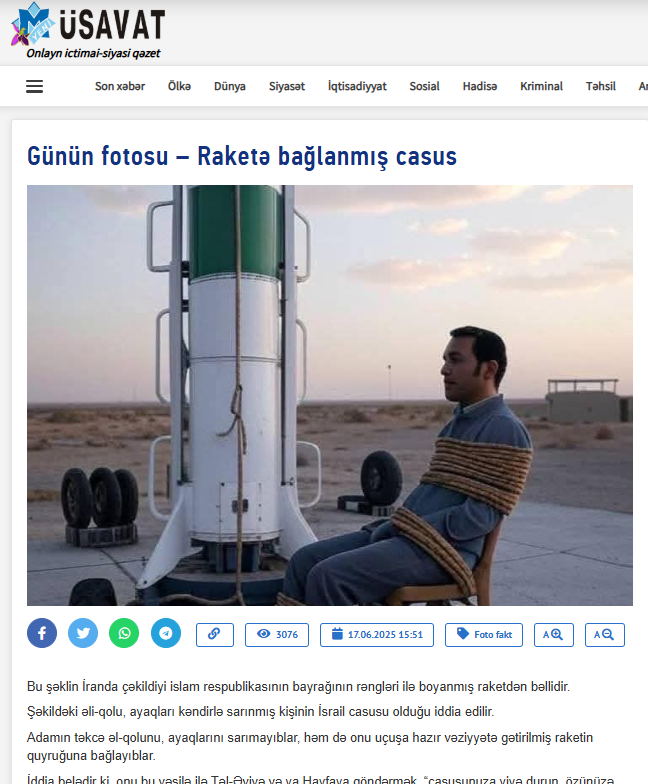
Despite its viral spread, including publication by some Azerbaijani online media, the photo was quickly debunked by fact-checking platforms which confirmed that it was AI-generated and fake. The image showed multiple signs of manipulation, including distorted objects and incorrect symbolism.
While disinformation is a global challenge, leading international media organizations have developed certain strategies to fight against it and Azerbaijani media outlets can adopt it, as well. For example, media organizations as BBC, Deutsche Welle, Reuters have dedicated fact-checking teams, implement multi-layered editorial oversight, and emphasize transparent correction practices.
Those teams apply reverse image searches, geolocation tools, and metadata analysis to verify content before publication. Digital forensic methods and open-source intelligence are widely used to assess the authenticity of social media content and viral claims.
By utilizing similar editorial standards and verification processes, Azerbaijani media can reduce vulnerability to disinformation, fake news and with that they can achieve public trust.


